 70°f / 21°c




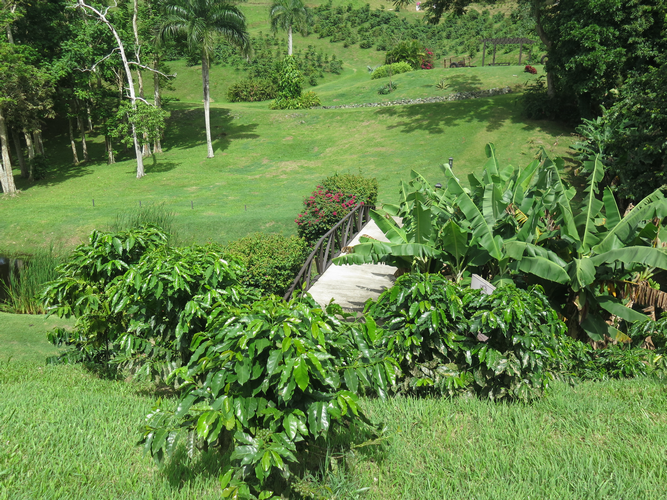
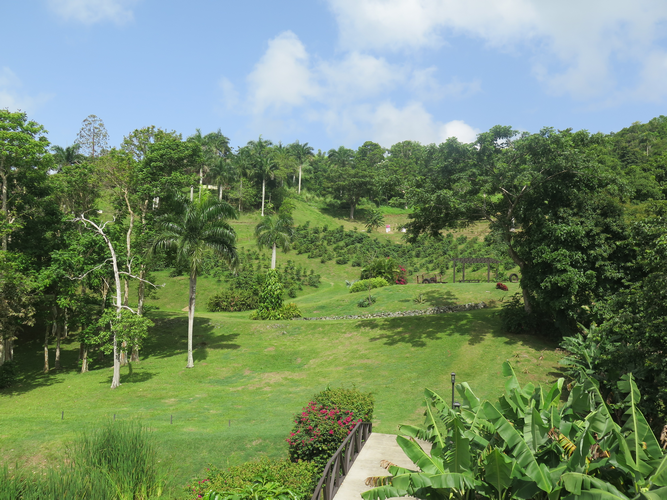
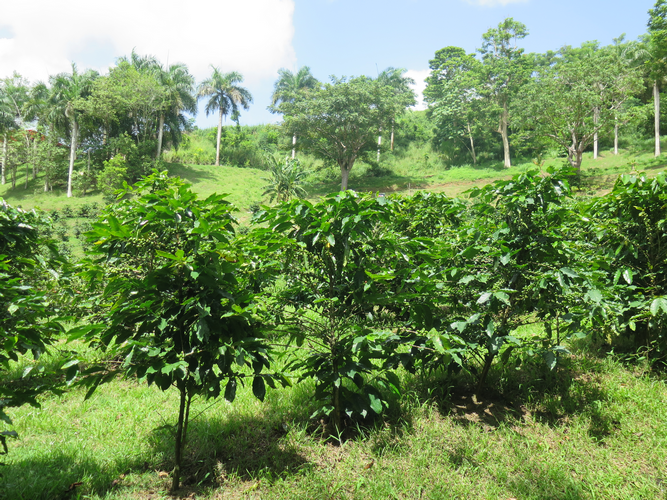
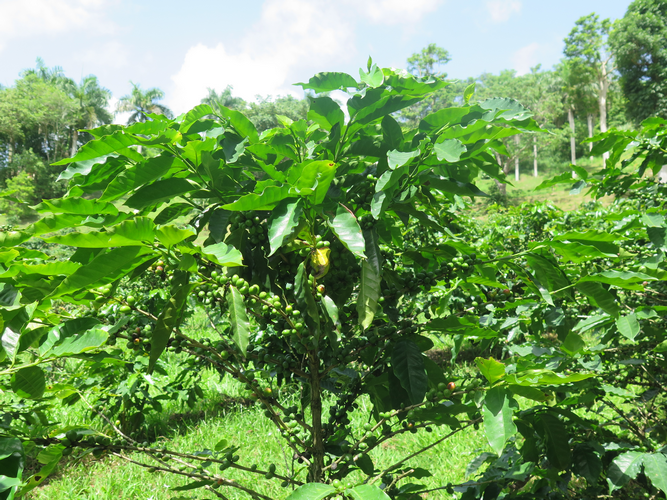
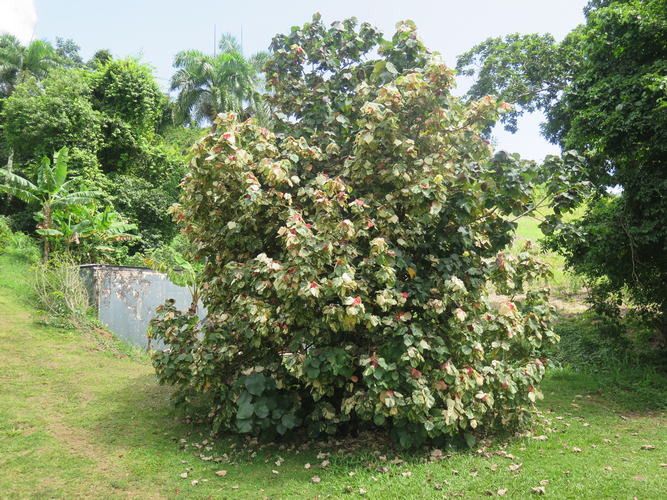
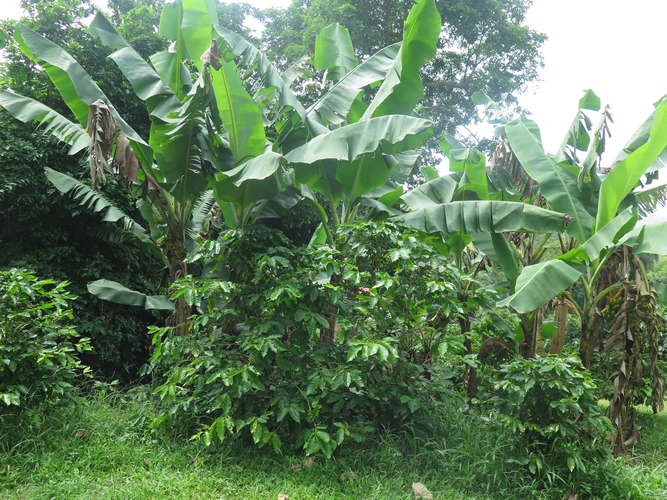
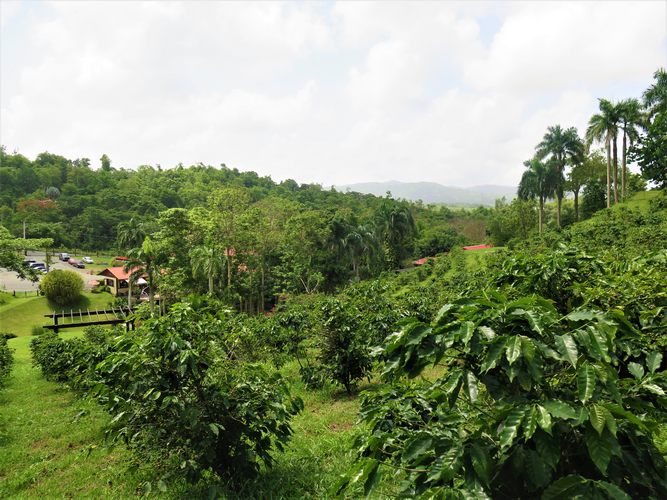
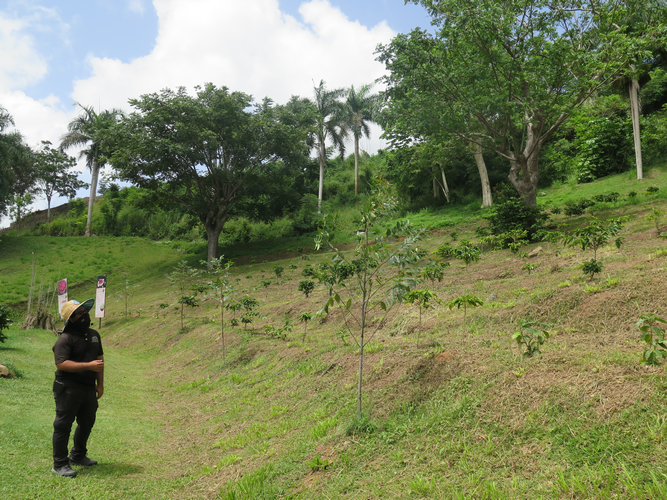
“Inviting” is the word that first comes to our mind when we think about the coffee hacienda we visited in the Municipality of San Lorenzo, Puerto Rico. Our visit to Hacienda Muñoz was distinguished by picturesque views of the farm per se and calmness. An extremely beautiful landscape design of aligned coffee trees surrounded by Puerto Rican royal palms, African tulip trees and plantain plants, among other vegetation, captivated us immediately in this peaceful place. A distinctive coastal hibiscus tree (Hibiscus tiliaceus) (“majagua” in Spanish), colorful plants and small eucalyptus trees were other pleasant companions found along our way as we explored this agricultural field.
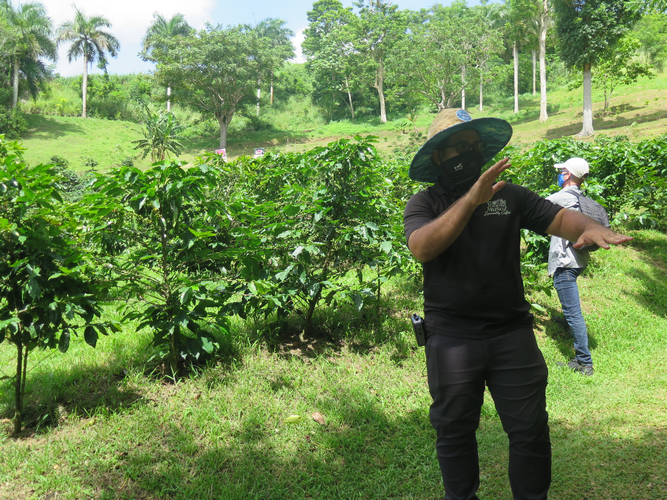
While looking at gorgeous coffee trees, Luis Alicea guided us and talked about Hacienda Muñoz’s 100% arabica coffee beans and important factors that help achieving specialty coffee score (80 points or above). Luis explained in detail how coffee quality depends on a combination of factors such as soil, nutrients, elevation, climate, coffee fruit-pickup method, coffee fruit and bean processing, and coffee roasting. He said that Hacienda Muñoz seeks coffee quality in every step of the way. For instance, Luis stated that they don’t use chemicals for cultivation purposes, and that coffee fruits are handpicked during harvest season for quality control purposes. He further explained other practices applied that have resulted in Hacienda Muñoz’s specialty coffee samples to be graded with an 84-86 score range.
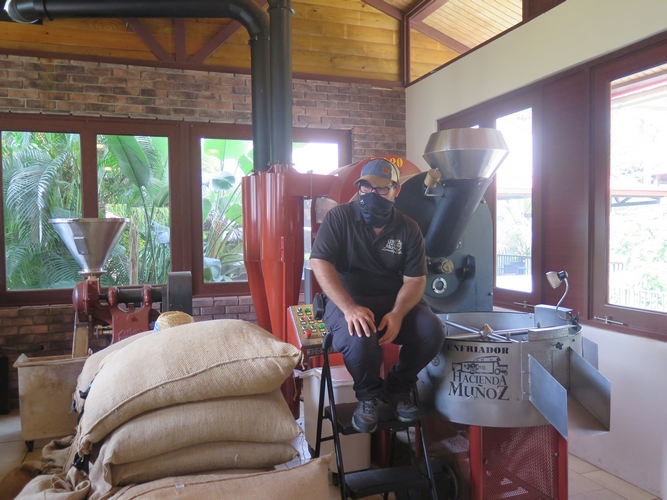
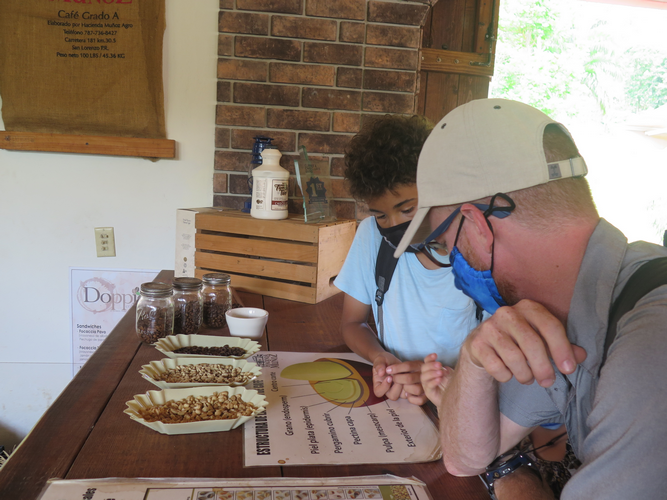
After the pleasant walk in the farm and looking at terrific views from the top of a hill, we walked into the coffee processing machine area. Luis explained how the machines work for purposes of selecting ripe coffee fruits, pulping (removing pulp and extracting coffee beans) and cleaning coffee seeds (beans). Luis added that following coffee bean dry process, machines remove coffee beans’ parchment, and classify the resulting green beans by size, weight, and color for quality control purposes, and thus, separate the quality ones from the damaged ones.
Luis mentioned that Hacienda Muñoz mainly engages in the washed process, which entails picking coffee fruits, pulping, cleaning coffee beans (removing mucilage, a gelatinous layer around the bean), and later drying these. However, on limited occasions Hacienda Muñoz carries out the following processes: (1) honey process, which involves picking coffee fruits, pulping, and drying coffee beans, and (2) natural process which consists of picking coffee fruits and drying coffee beans. According to Luis, coffee processed under the latter methods tastes fruity and sweet since the mucilage is not removed. So he emphasized that, in general, the end result under each process is different in terms of taste experience and not quality. Not surprisingly, drying takes longer under honey and natural processes.
Also, Luis talked about coffee bean roasting process as he showed the machine in charge of such. He said that a light roast helps retain coffee acidity and results in more body as compared to dark roast’s effects. Hacienda Muñoz sells medium roasted and dark roasted coffee for people to choose from according to their taste preferences.
Hacienda Muñoz is a place where you can learn about coffee production in Puerto Rico and specialty coffee processing while admiring a lovely farm. Guided tours are subject to prior reservation. T: 787-736-8427 W: haciendamunozpr.com




comments