 70°f / 21°c




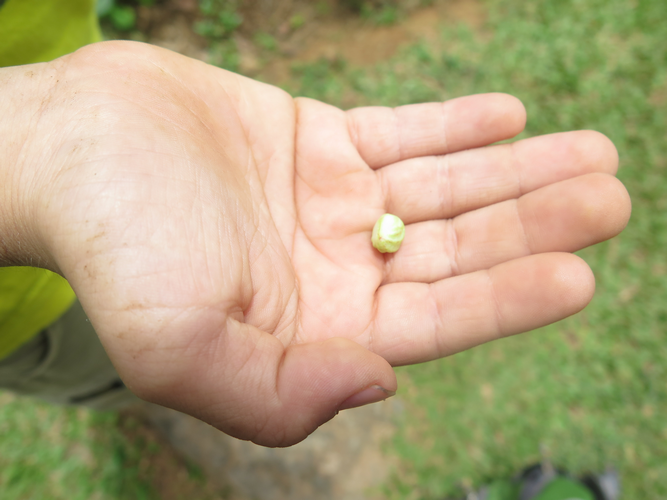
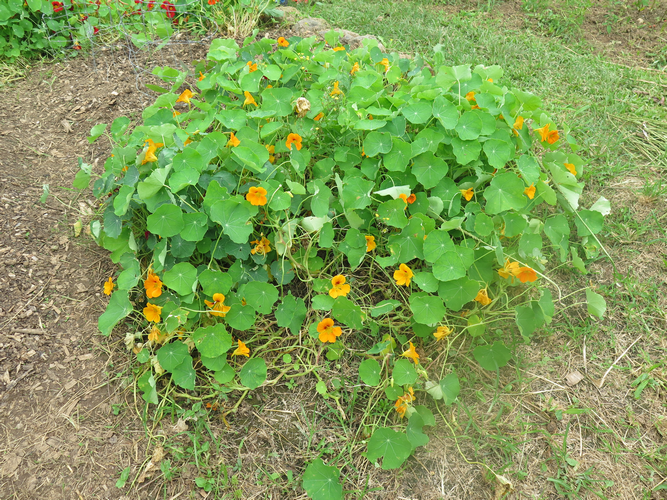
Once we arrived to Siembra Tres Vidas Farm in Aibonito, Puerto Rico, Daniella Rodríguez, one of the farm’s owners and farmers, and her 4-year-old son, Cyán, served as hostess and host. Cyán offered us the seed of the Garden Nasturtium flower plant (“Capuchina” in Spanish) as a welcome gift, which I interpreted as a symbol of life, reconnection and Mother Nature’s legacy.
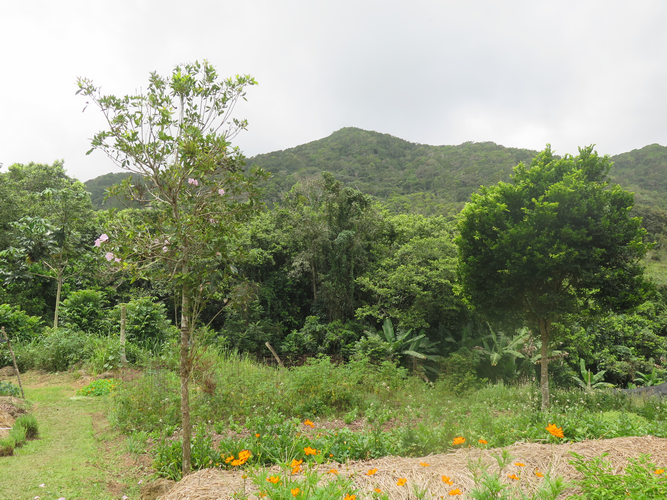
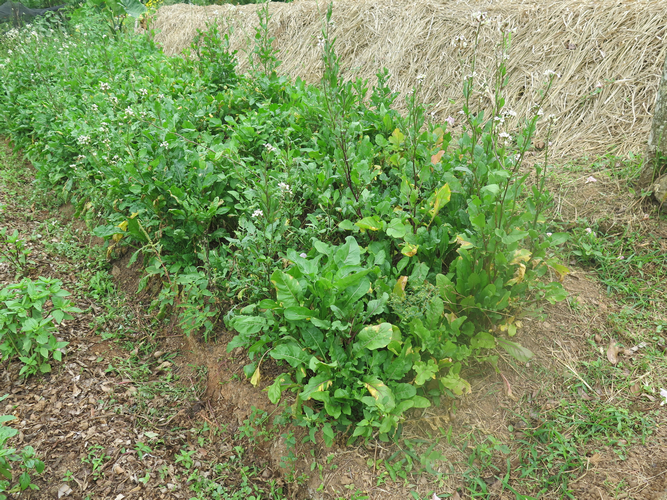
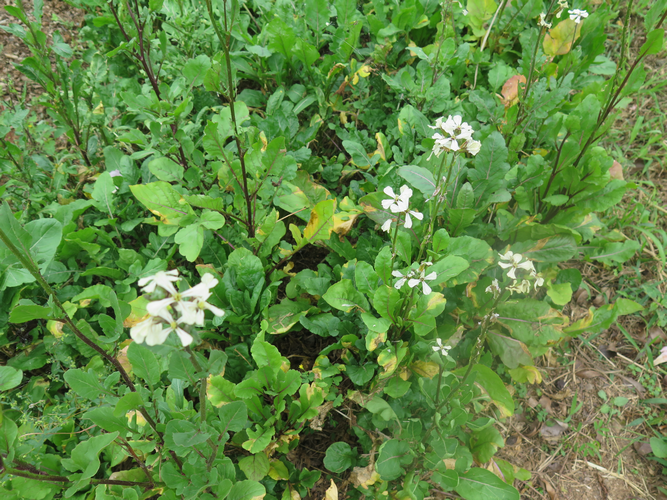
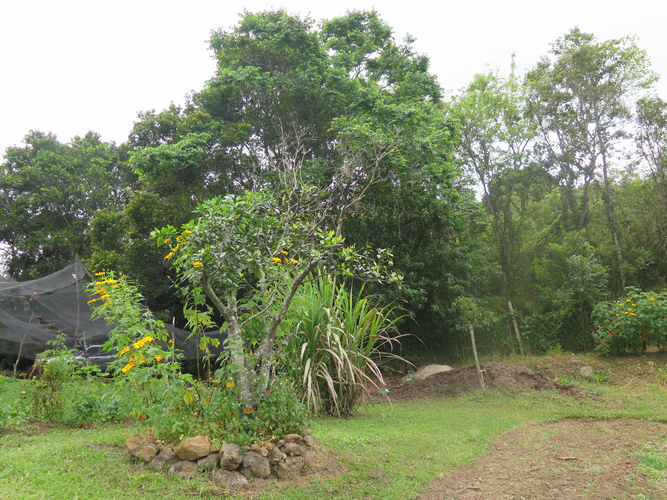
Siembra Tres Vidas, located at the top of a hill at Pasto neighborhood, is comprised of around 1.9 acres (2 “cuerdas”) of land dedicated to the artisanal harvest of multiple crops, such as salad greens, wild plants, medicinal plants and herbs. Currently, the farm is entering the market of edible flowers, which are being sold to restaurants. The Garden Nasturtium flower and the arugula plant flower are examples of edible flowers we appreciated during our visit.
As we were witnesses of her pride and contagious passion, Daniella explained that Siembra Tres Vidas is a self-sustained farm where they prepare everything needed for the harvest, and use organic seeds. For instance, they prepare their own agricultural supplies and compost. They try to the maximum extent possible not to purchase imported supplies, as stated by Daniella.
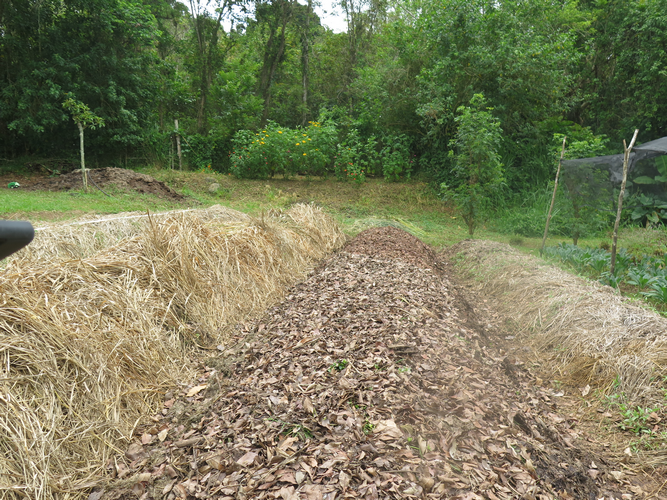
As we walked down the hill, Daniella showed us the compost piles made out of different layers covered by grass on the top. She explained that the compost is comprised of ecological material, such as grass from the farm, animal dung from a neighbor’s farm, and substrate of mushroom crops from a local mushroom farmer. Daniella explained that it takes around three to four months for these to convert into homogeneous material that is mixed with the farm’s soil. This is a true example of how to reuse material that contributes to the farm’s production, transforming residues and waste products into resources for Siembra Tres Vidas Farm.
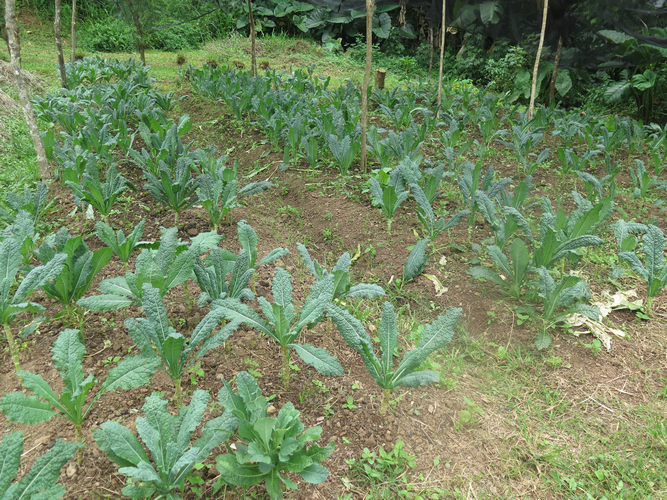
Nearby the compost piles, we stared at very green Kale crops, which were planted under shadow to prevent the sun from damaging its leaves, as stated by Daniella. She taught us that Kale is derived from the same plant from which broccoli, cauliflower and Brussels sprouts are derived from. This plant is known as wild cabbage (Brassica oleracea). Daniella further stated that these vegetable crops are the result of plant crossings made throughout generations by human beings.
As we continued walking on the farm’s trail, we had the chance to see arugula plants and their edible white flowers. Daniella explained that as these flowers blossom, arugula seeds are generated. These seeds are planted to grow more arugula crops in Siembra Tres Vidas Farm.
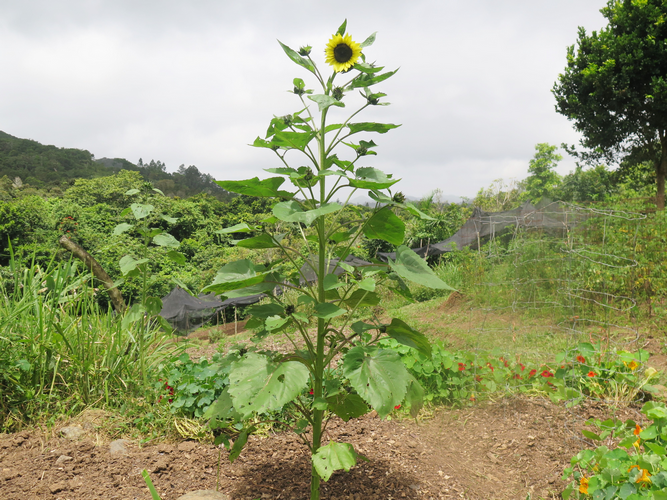
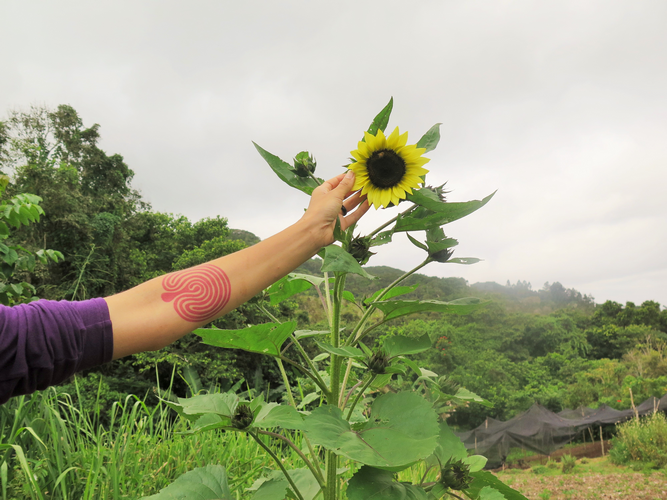
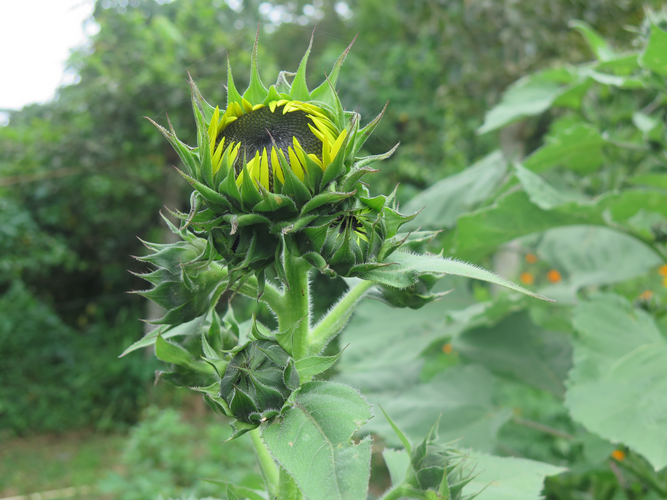
Then we were lucky to witness a bee drinking sunflower nectar and pollinizing the flower. Check out our photo gallery to appreciate a photo shot of this scene.
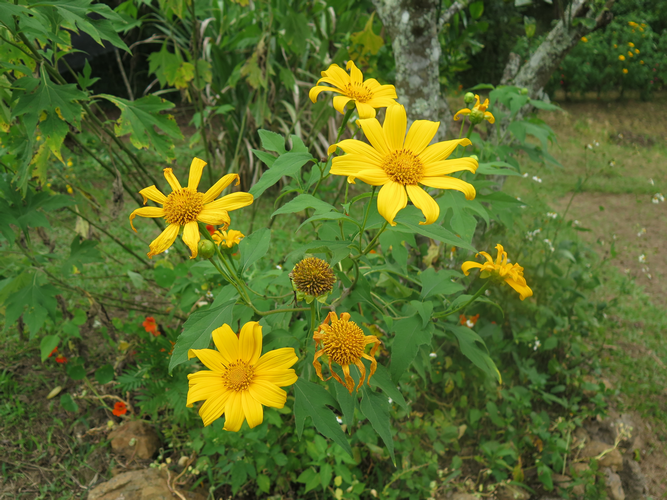
Also, we appreciated a beautiful yellow daisy-like flower tree (“Tara” in Spanish) (Oyedaea Verbesinoides), which flowers smelled like honey. This is something that both adults and kids love to experience.
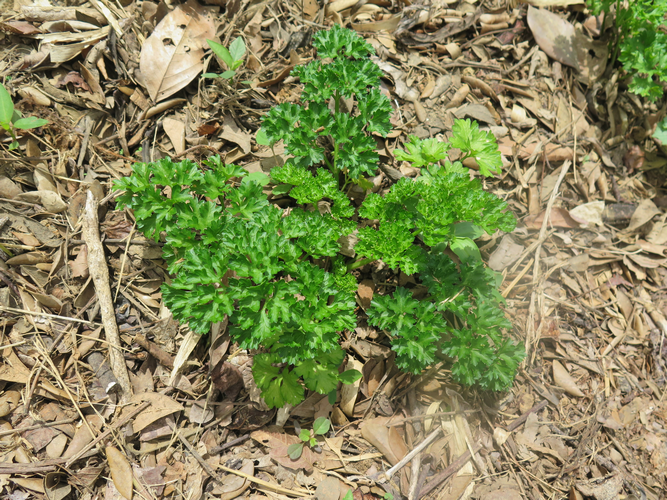
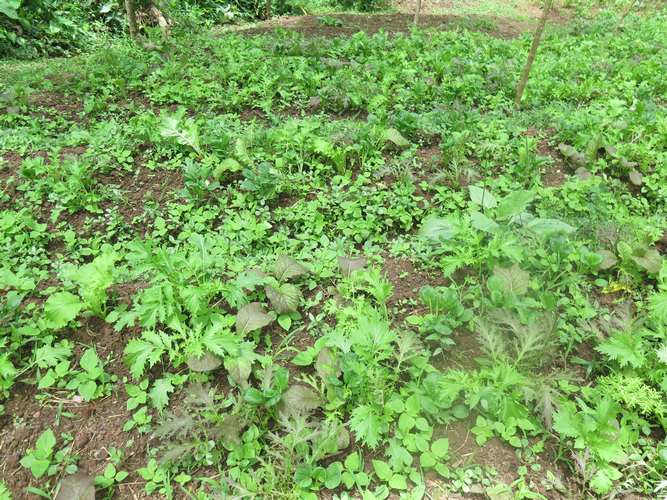
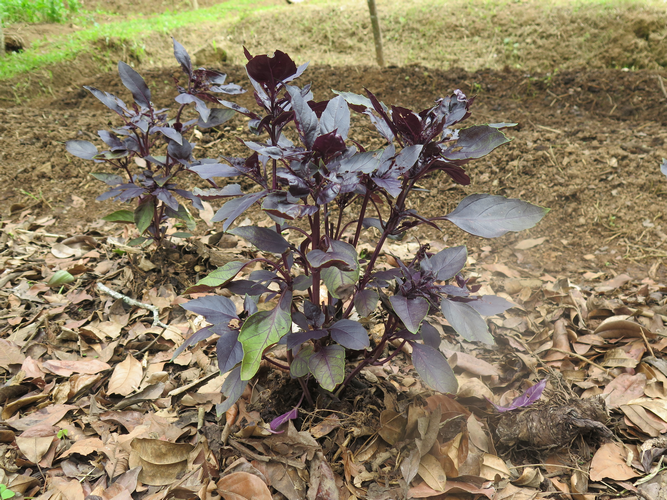
After walking next to crops of local parsley, purple basil and others, we reached the area where we admired lots of mesclun. Mesclun is a mix of asian greens which are known for their stronger flavor in comparison to lettuces, and which tend to have a higher nutritional value, and medicinal attributes, as stated by Daniella. She explained that the mesclun grown in Siembra Tres Vidas Farm includes many mustard leaves such as mizuna, and purple spicy leaves, arugula, tatsoi and radish leaves.
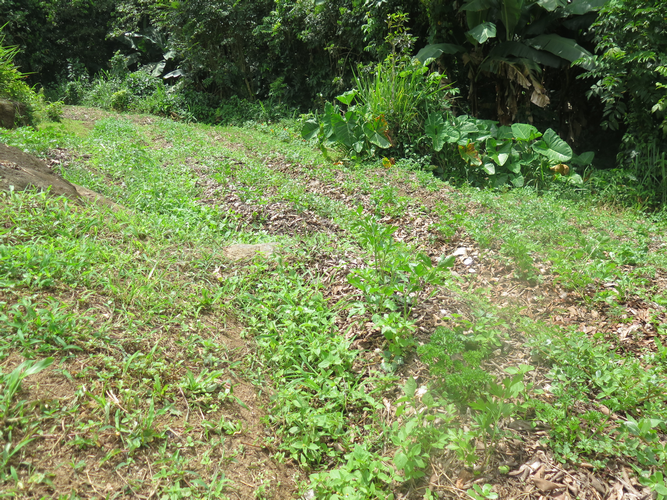
As we admired the mesclun, this proud farmer explained that they implement crop rotation technique to prevent viruses among the crops. Also, she stated that they prepare the soil to prevent erosion and the loss of minerals.
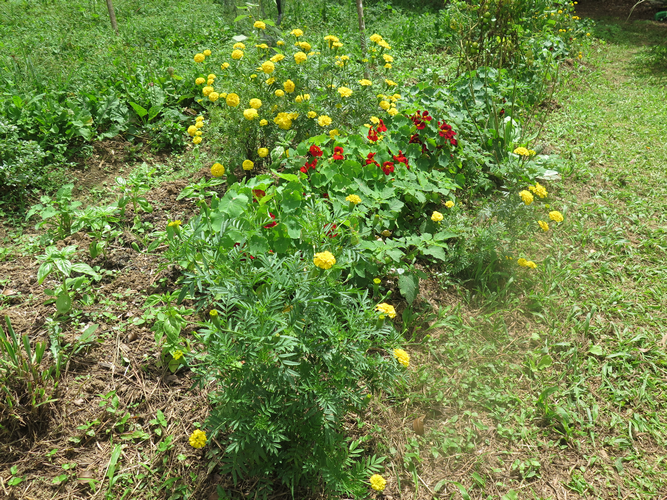
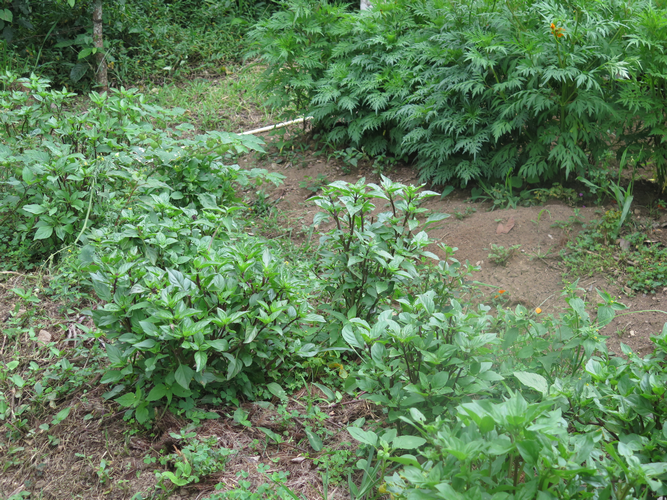
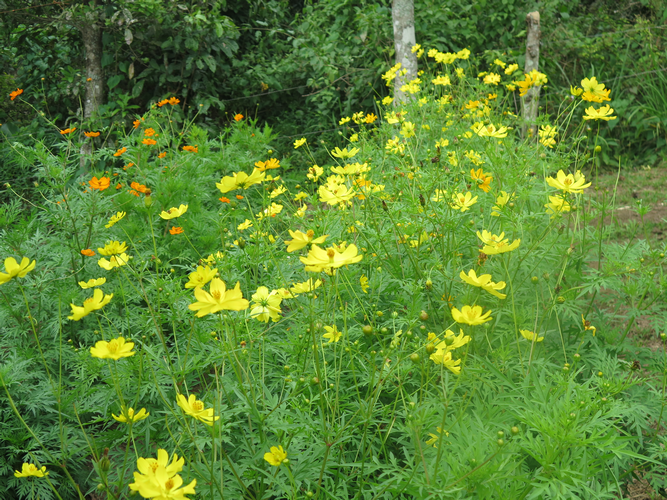
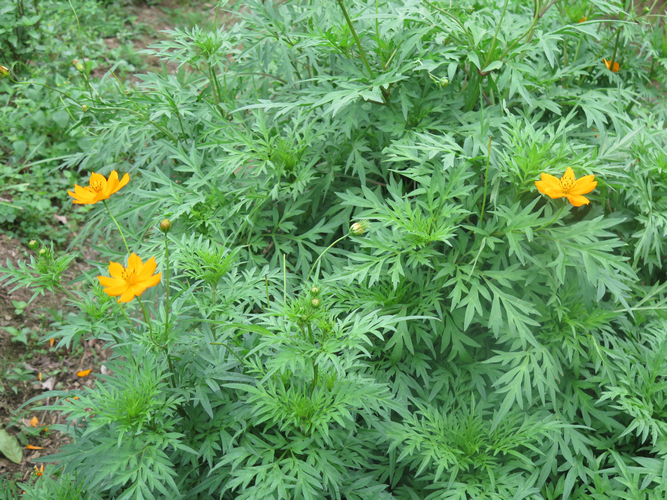
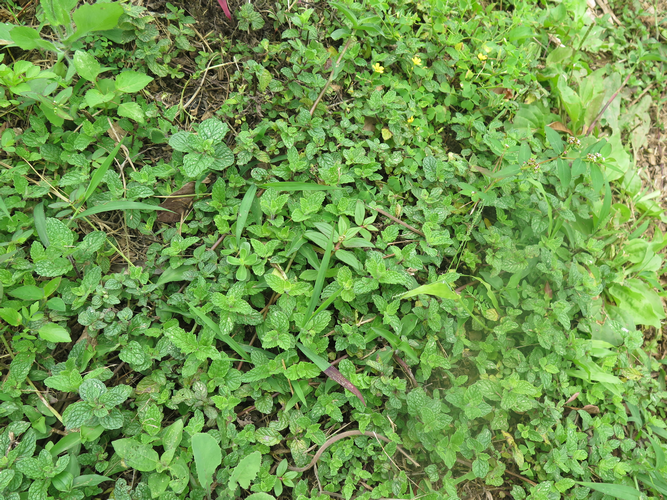
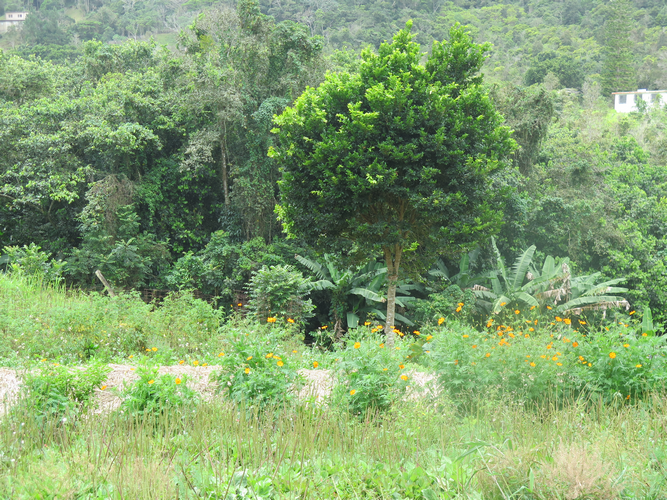
As we climbed on the other side of the hill, we were surrounded by beautiful sunflowers, thai basil, mint plants (“Hierba Buena” in Spanish) and edible orange and yellow flowers known as cosmos.
Then Daniella showed us the area where they first plant the seeds of delicate plants, such as parsley, cilantro, ginger, and flower plants. At this area, the sun and water exposure is controlled. As these plants grow more, they are replanted in another area to be exposed to some sunlight. After a while, the plants are ready to be replanted at the regular crops area with full sun exposure.
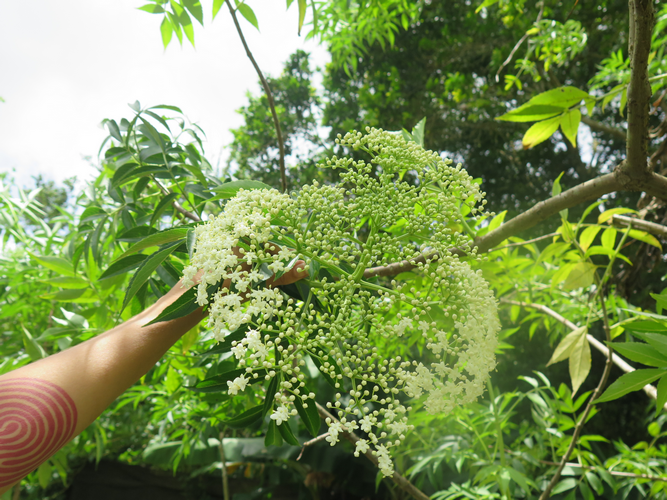
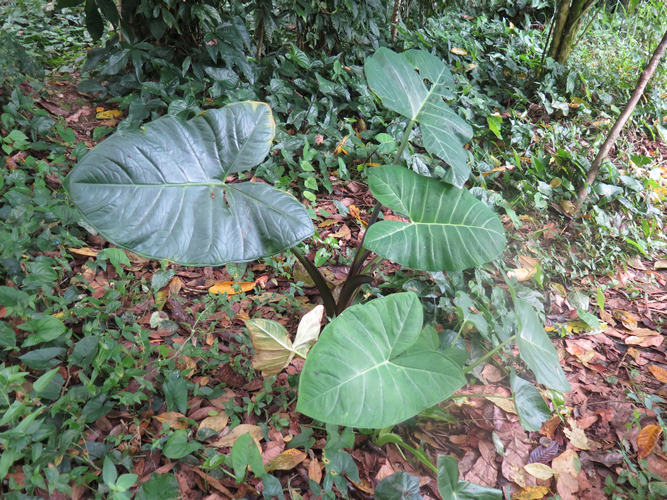
The farm also has crops of dill and the elder tree (“Saúco” in Spanish), which are medicinal plants. We also noticed wild crops of root vegetables, such as yautias and taro (“malanga in Spanish”), surrounded by banana trees.
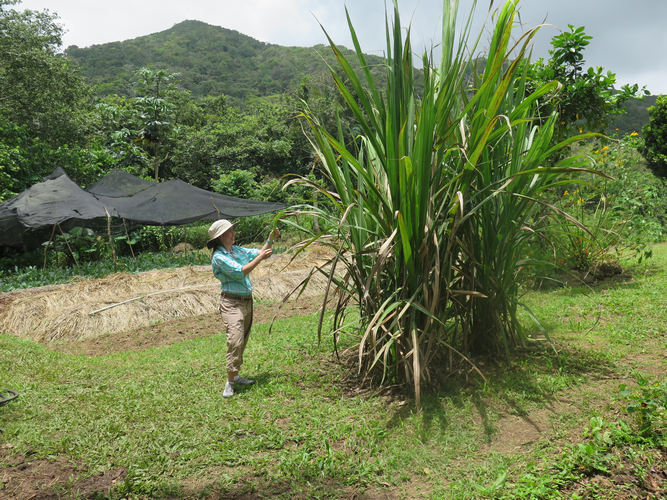
During our visit, we learned how farm work in Siembra Tres Vidas is performed with a high respect to and in harmony with nature, taking advantage of the natural processes of Mother Nature; and thus, engaging in ecological farming. Learn more about this by reading the “tips” subsection.
This experience was an absolute reconnection with the earth.
By the end, Daniella happily shared fresh arugula with us as she suggested cooking arugula pesto with sunflower seeds or pistachio nuts. Be sure to read the “ delve! ” subsection to learn how we cooked a delicious and savory arugula pesto.
The walking tour in Siembra Tres Vidas lasts around one and a half to two hours. The farm is available for walking tours on Fridays from 8:00 am- 3:00pm, and Saturdays from 10:00 am to 5:00 pm, subject to prior reservation. Such itinerary includes closing time; so you would need to schedule accordingly. For those interested to purchase the farm’s crops, it is suggested that you inform such to Daniella at the time of the reservation. T: 787-431-8424, E: siembratresvidas@gmail.com
Article translated by: N. Michelle Rodríguez Amadeo




comments