 70°f / 21°c





While agricultural spots tend to be in the countryside or a few hours away from a city, those interested in engaging in agritourism have the opportunity to visit hydroponic greenhouses and a farm in Puerto Rico’s metro area. The William Miranda Marín Botanical and Cultural Garden in the city of Caguas is a recreational area where guided tours may be scheduled to learn about hydroponic systems and its produce as well as crops growing in a farm.
Beatriz Sánchez Arroyo, founder and owner of Hortalizas Guayanés, Inc., opened the doors of the premises where alternate farming systems are implemented in Caguas Botanical and Cultural Garden. She informed that hydroponics does not require the use of soil to grow plants, and emphasized that such agricultural system enables to use less space than a farm to grow the same crop yield. She clarified that this alternate agricultural method is suitable for certain crops such as salad greens and certain herbs.
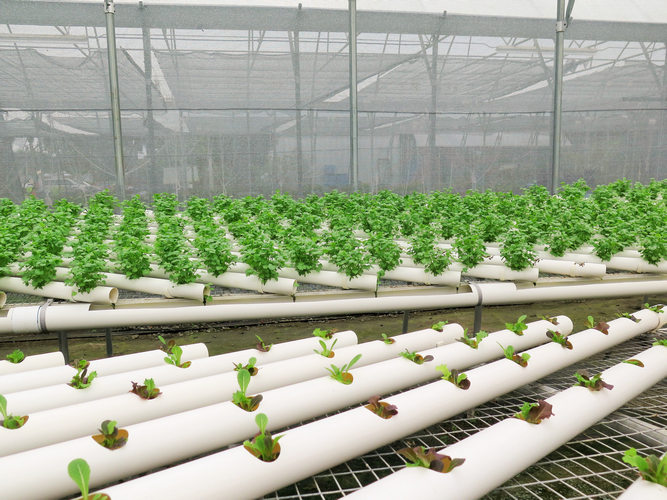
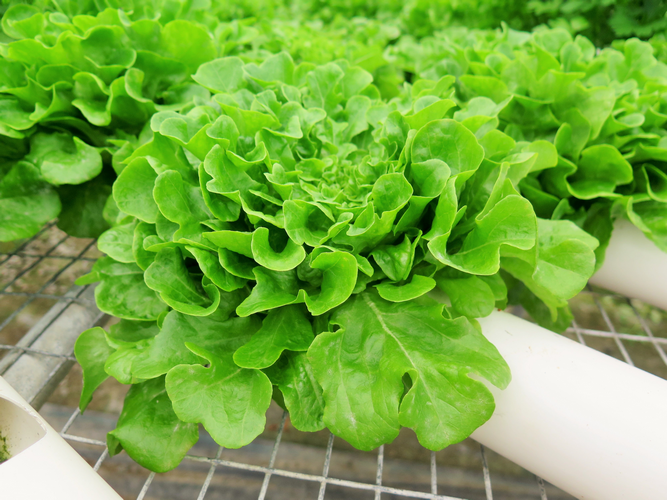
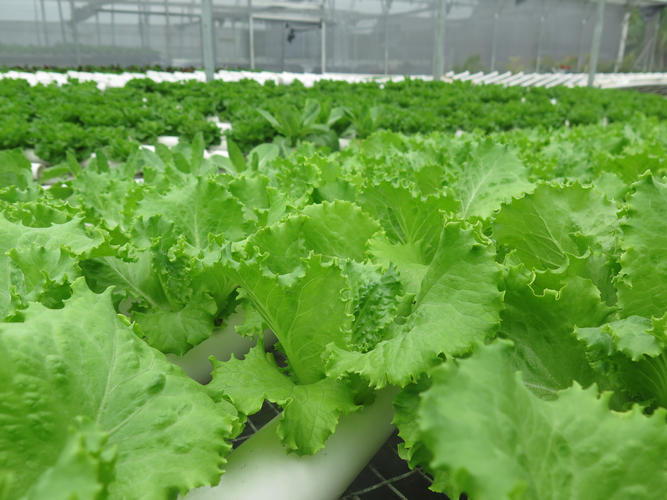
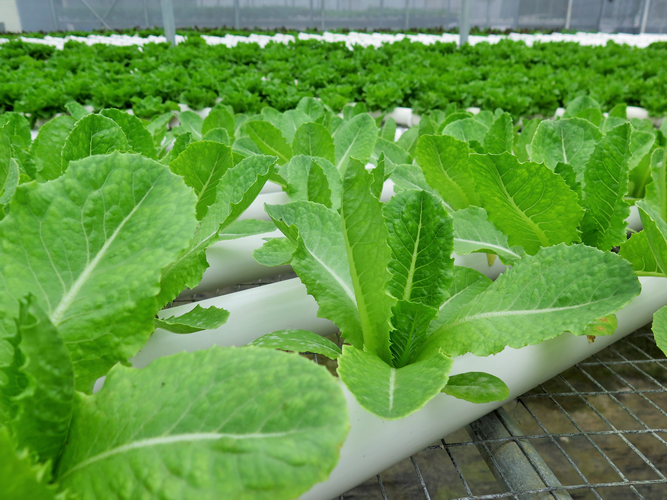
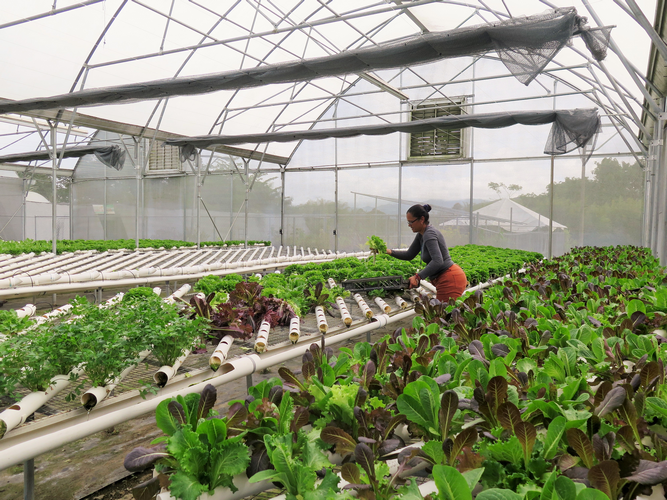
The principal hydroponic system implemented by Hortalizas Guayanés is the Nutrient Film Technique (NFT) system, where seedlings along with their growing mediums are placed in holes of tubes that lie horizontally on tables. Beatriz explained that a solution made of water from a well and dissolved nutrients flows on the bottom of the tubes and wets the seedlings’ roots. A thin layer (film) of nutrient solution is pumped from a tank into thin hoses and then into the tubes. She said that the nutrient solution is recirculated back to the tank; however, more water and nutrients are added, as needed. A cooling system is used to maintain the proper temperature of the nutrient solution. A temperature of 70-85° F is recommended for the growing of salad greens and herbs by means of NFT, as stated by Beatriz. This farmer with around 10 years of experience in the NFT system highlighted the importance of monitoring that the plants’ roots are exposed to the right balance of nutrients, and that the nutrient solution’s temperature and pH level are appropriate, among other factors.
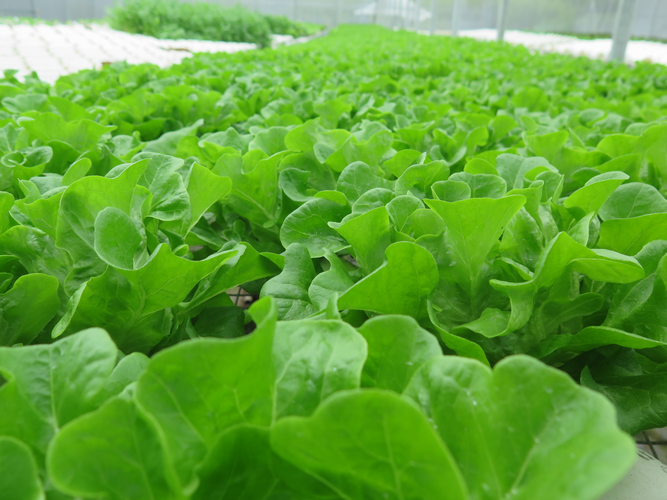
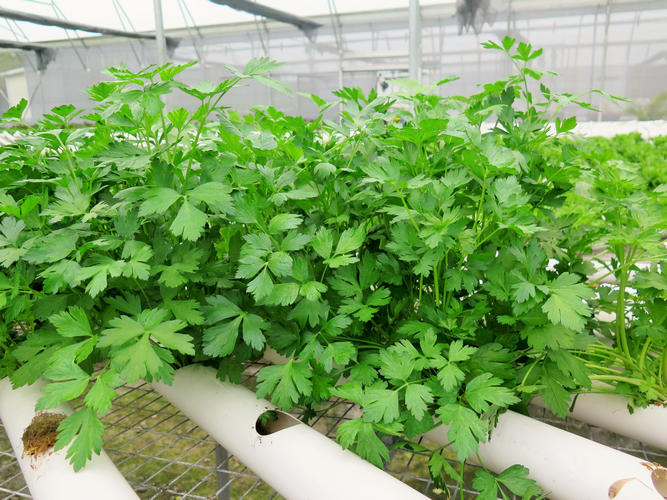
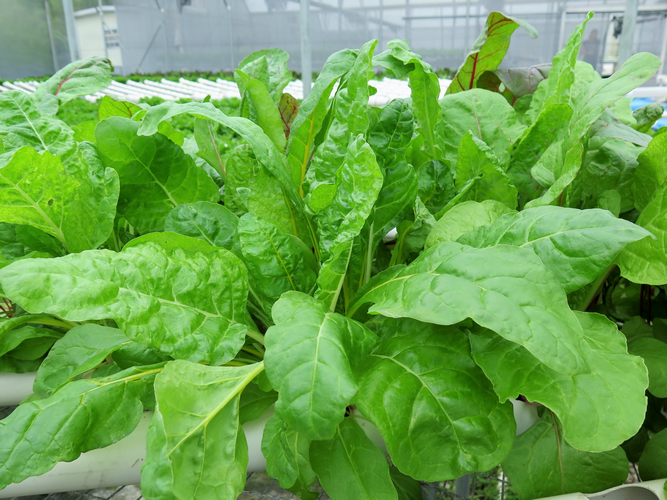
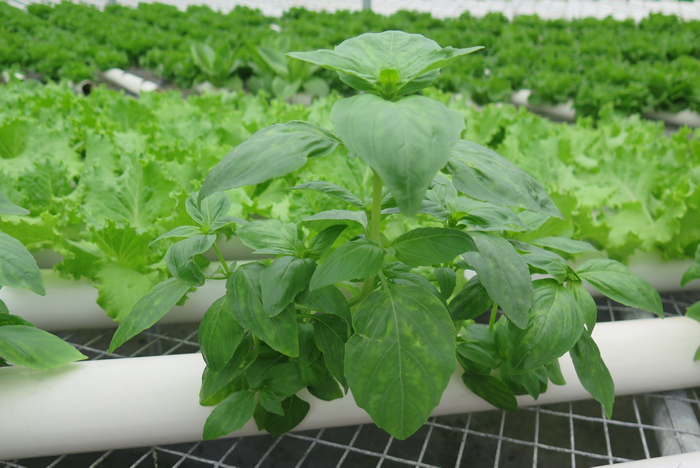
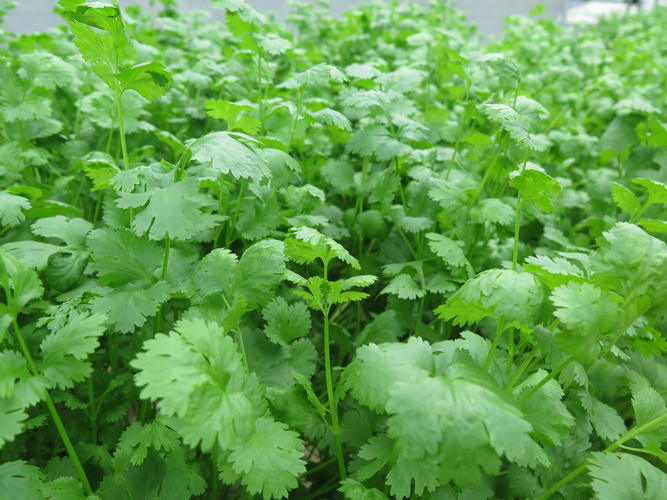
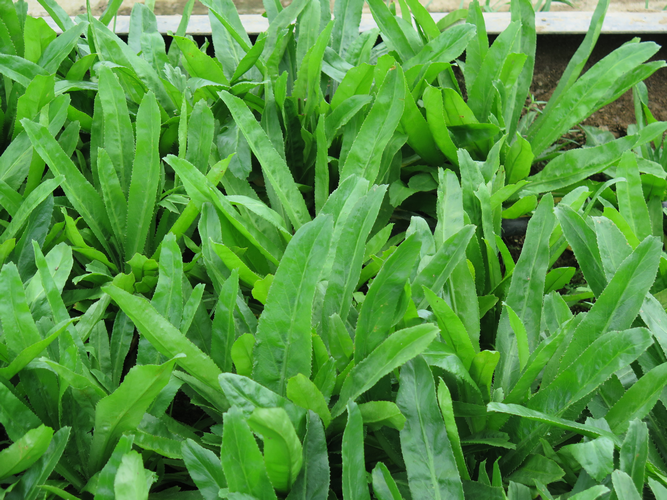
We were impressed by the abundance and beauty of diverse salad greens grown by Hortalizas Guayanés via the NFT hydroponic system—fresh Salanova Green Oakleaf lettuce, Tropicana lettuce (known as “lechuga del país” in Puerto Rico), mesclun, romaine lettuce, and chard (a/k/a Swiss chard) stood out in the greenhouses. Fresh herbs, such as basil, Italian parsley, and cilantro, accompanied the lettuces. We were able to appreciate different growth development stages of the crops. During the hottest months (March-October), the salad greens are ready to be packed after a four-week period of growth in the tubes while the herbs tend to be ready before, as informed by Beatriz. She pointed out that crop production may advance one week during November-February. You may browse our photo gallery to see NFT-crops growth, depending on their development stage.
Currently, a maximum of 1,400 seedlings may grow in the NFT tubes to produce around 9,800 pounds of crops, as mentioned by Beatriz. She said that an average weekly production of 500 pounds of Salanova Green Oakleaf lettuce, 800 pounds of Tropicana lettuce, and 100 pounds of cilantro, among other crops, are packed and sold to recurrent customers. The proud entrepreneur stated that a total of around 2,800 pounds of crops are harvested weekly. Both businesses and individuals are welcome to purchase these crops.
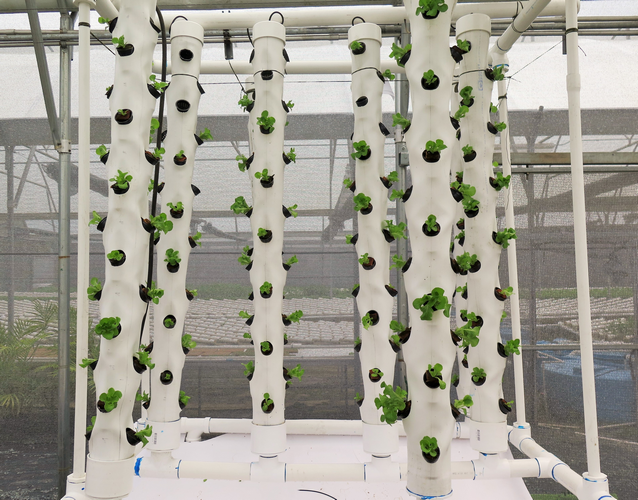
Even though the NFT is the main hydroponic system implemented by Hortalizas Guayanés, other hydroponic systems are present at the greenhouses. One of these systems is known as aeroponics. Beatriz explained that, under this method, the seedlings are placed in small net cup pots which are put in holes of tubes that stand vertically. The seedlings’ roots hang inside the tubes where they get misted with nutrient solution. Beatriz emphasized that the tubes take less space than the NFT system, allowing the growth of more plants per a particular space area. However, so far the resulting weight of each crop has been less than when grown via the NFT system. This farmer keeps implementing methods to improve production through this system.
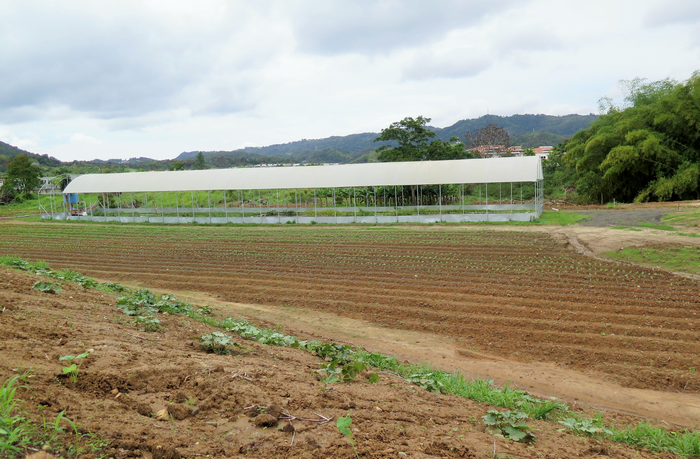
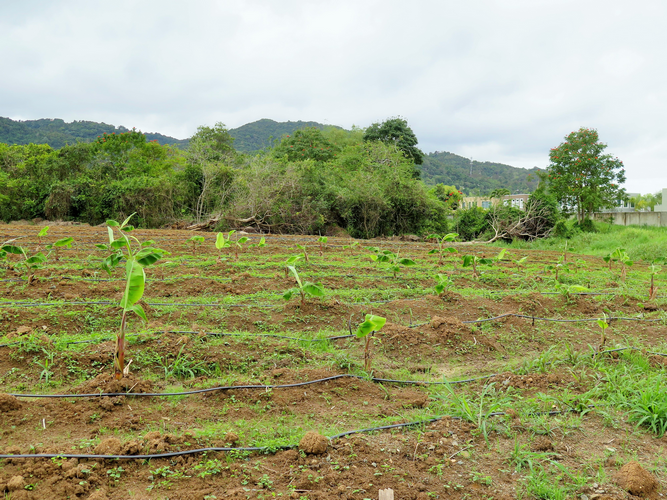
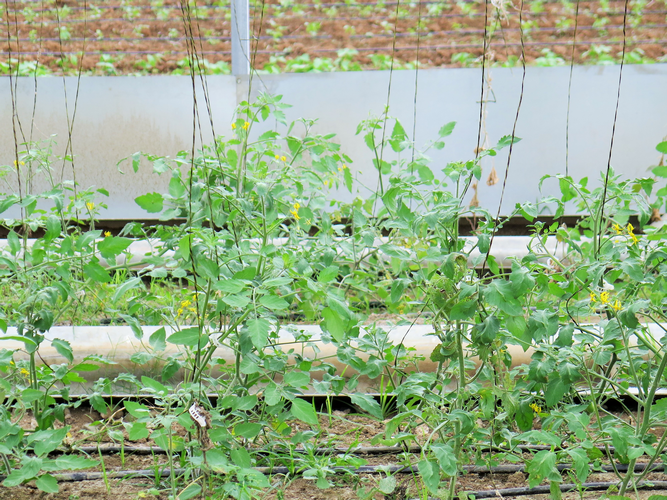
Afterwards, we visited a farm where Hortalizas Guayanés began cultivating around two to three months ago. From the top of a small hill, we admired the area where Taína Dorada pumpkin, pigeon peas, and white beans, among others, have been planted. Sweet potatoes, cassava (yuca), and yautia plantations are seen in another area. Beatriz highlighted that these plants’ seeds are local, specifically from Puerto Rico University’s Experimental Station in the Municipality of Isabela. More agricultural products are harvested in a greenhouse nearby the farm: grape tomatoes, chives, culantro, red peppers, chili peppers and bell peppers, among others.
Beatriz informed that a drip irrigation system is used in the farm and the nearby greenhouse in order to manually wet, as needed, the plants with a solution made of water from a well and dissolved nutrients. The plants’ development, the nutrient solution and the soil’s pH level are monitored, according to this farmer.
Visiting agritourism areas in the Caguas Botanical and Cultural Garden is a pleasure. Even better, seeing people happily performing their tasks so that customers receive fresh crops is a good-vibes memory we will never forget. Their enthusiasm is contagious.
Those interested in scheduling a tour to explore the hydroponic greenhouses and visit the farm and its surrounding areas, may contact Hortalizas Guayanés, which manages these spots in collaboration with the Caguas Botanical and Cultural Garden. Currently, prior reservations are needed to book this tour. Students and other volunteers are welcome to perform agricultural tasks in the farm and nearby greenhouse. T. 787-460-4046. E: hortalizasguayanes@gmail.com





comments